Summary
Type: Game Jam
Completed: Released
Acquirable: itch.io
My Role: Game Designer
Time Frame: 24 hours
Overview
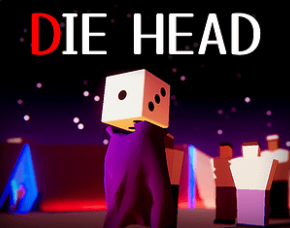
Die Head is an arcade-style wave survival prototype created during a two-week game jam with a strict limit of 24 hours of logged development time. The game is built for players who enjoy classic Flash-era arcade titles: simple rules, quick sessions, and the fun of pushing one more wave further than the last.
The player fights through waves of enemies using two dice. One die determines the ability, and the other determines the modifier. The combination encourages light improvisation as players try to group enemies together, react to their rolls, and survive long enough to beat their previous score.
I designed and implemented all gameplay systems, abilities, UI, level design, health systems, scoring, and tuning. Only the art came from external assets.
Audience
The intended players are fans of:
• Flash-style arena and arcade games
• Simple, readable moment-to-moment mechanics
• Short play sessions with replay value
• Randomised ability outcomes that encourage improvisation
This audience values:
• Clarity over complexity
• Fast understanding rather than onboarding
• Systems that “just make sense” the moment you see them
These expectations shaped design choices.
Core Mechanics
Two-Die Ability System
The player rolls:
1. Ability Die — selects the ability
2. Modifier Die — adjusts how strong or large the ability is
The system encourages the player to:
• Train enemies into groups
• Trigger abilities at the best moment
• Adapt to their rolls
• Survive long enough to improve their high score
All abilities and modifiers were designed and implemented by me.
Level Design
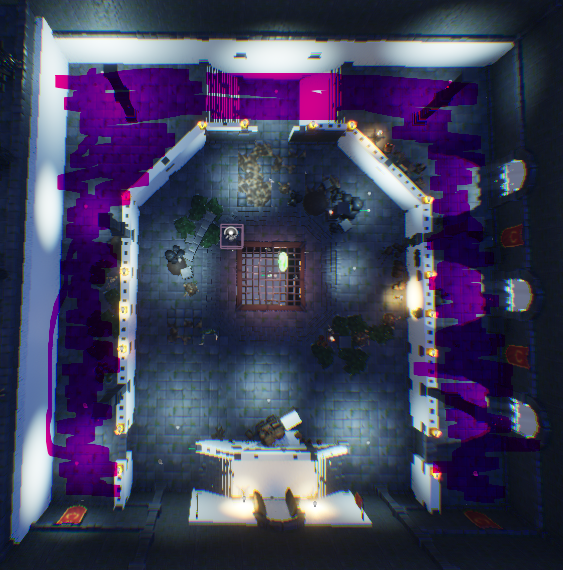
Purple highlight indicates the added second level.
The initial map used an asset-pack example scene as a base, but I rebuilt and tuned it to improve readability and flow.
Changes included:
• Adding a second movement level above the original for better navigation
• Removing a wall near the camera to reduce visual confusion
• Replacing most environment hitboxes with clean custom geometry
• Moving doors to avoid misleading the player
• Rearranging props to act as functional obstacles
• Removing railings that caused AI traffic jams rather than redesigning AI behaviour
The result was a simple arena that supported movement, grouping enemies, and clean visibility of the dice abilities.
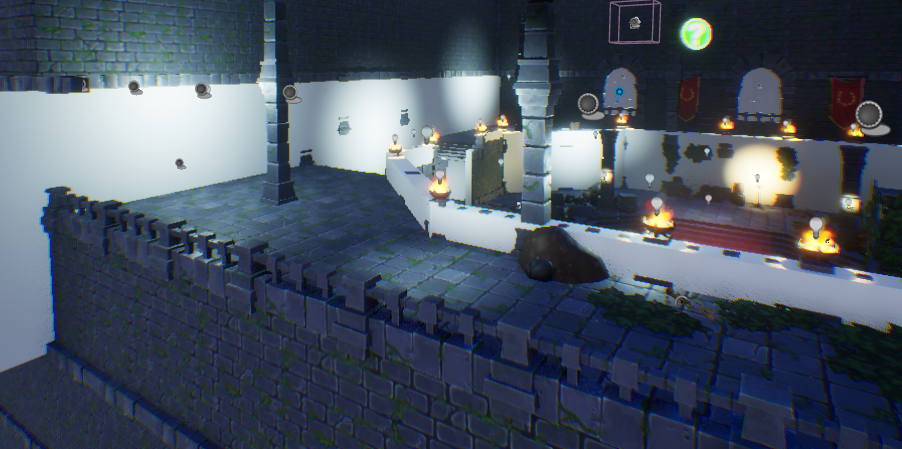
Updated wall with visible hitbox. Large to stop dice from rolling out of map
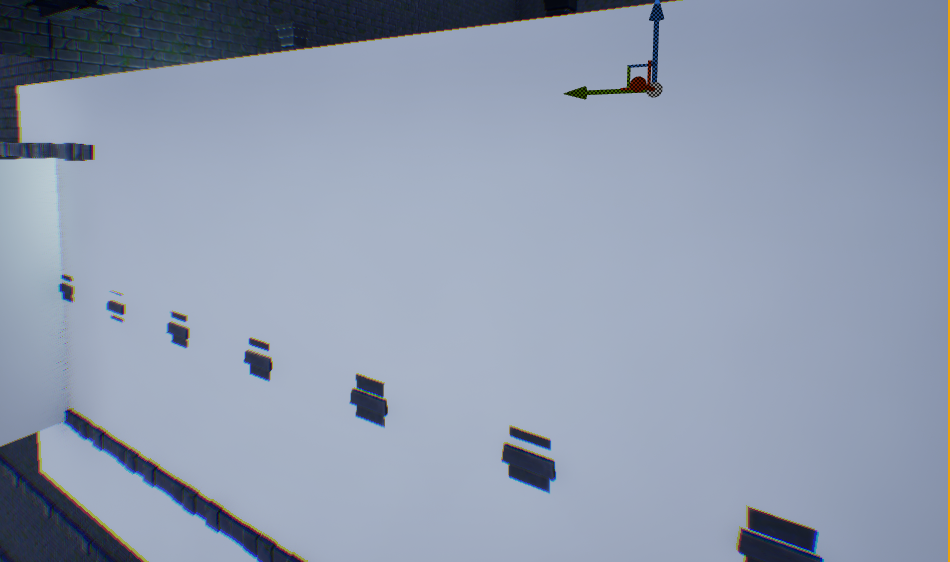
Updated wall to allow camera view
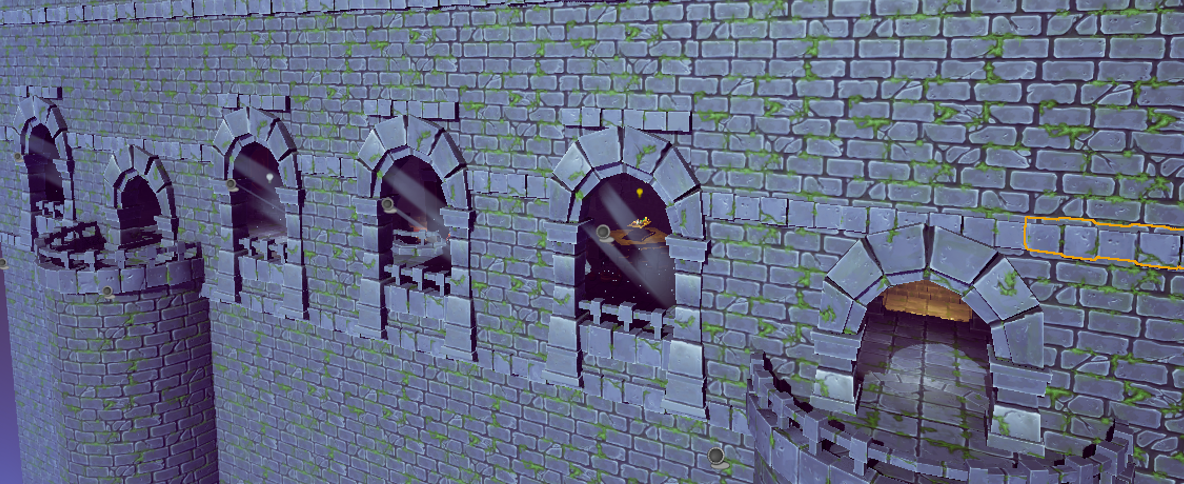
Original wall that blocked cameras
UI and Readability
With no time for a full tutorial, UI had to explain the game clearly on its own.
I implemented:
• On-screen ability descriptions so players could understand rolls instantly
• A display of the currently face-up ability while the dice were still rolling
• Clear feedback for ability outcomes and health overflow
This allowed players to strategise without pausing the action and it worked within the timeframe
Health & Score Systems
Health System
• Player health is capped at 20
• Extra health becomes a temporary overflow “shield”
• Overflow starts to decay after 3 seconds at a rate of 1 point per second
This made health multiplier-based rolls meaningful without permanently trivialising damage.
Score System
The scoring model was redesigned to avoid punishing players for rolling large dice.
Now:
• d20 = multiplier of 1
• d12 = multiplier of 3
• d10 = multiplier of 4.5
• d8 = multiplier of 5
• d6 = multiplier of 8.5
• d4 = multiplier of 10
This ensures every die feels viable and allows a single unified high score table.
What I Delivered
• All abilities and modifier interactions
• Combat systems and wave structure
• Full level design pass
• Complete UI allowing play with no tutorial
• Health and scoring systems
• Dice logic, prediction UI, and ability feedback
Why This Shows My Design Strengths
After some iterations players understood the could read the outcome of dice rolls and adapted naturally to the randomness of the system. The UI helped players strategise their rolls, and the arena layout allowed for smoother movement and clearer enemy grouping.
This project highlights my ability to design mechanics that suit a very specific audience: players who enjoy simple arcade challenges and quick, readable gameplay loops. I created systems that were easy to understand at a glance while still allowing for expression through positioning, timing and ability prediction. Working within a 24-hour limit reinforced my ability to scope effectively, prioritise clarity and still deliver a cohesive, playable experience.
What I’d Do Next Time
Next time, I would make all abilities consistently interact between both dice, rather than having some rely only on the first die. I would also allow players to throw dice while an ability is still running, rather than waiting for the animation to finish. This would improve pacing and keep the game feeling closer to the quick arcade rhythm the concept aims for.